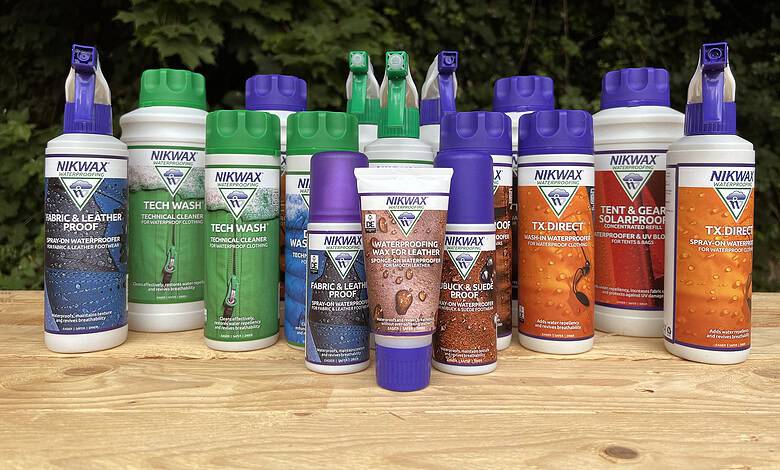
An aftercare shelf can carry plenty of products while leaving customers uncertain about what their jacket needs. For an outdoor retailer, the useful question is whether staff can identify the garment, explain the appropriate care and help the customer follow the instructions with confidence.
A short service trial can make that work visible. The framework below is designed for retailers to use and adapt. It is original editorial analysis, not evidence that a particular aftercare programme has already increased sales.
Make the product label the starting point
GORE-TEX’s outerwear guidance says customers should follow the garment manufacturer’s instructions. It describes cleaning, drying and restoring water repellency, but also identifies exceptions: persistent-beading products such as SHAKEDRY have different requirements, including no tumble drying or DWR application. A universal wash-and-reproof script is therefore a poor basis for technical advice.
Train staff to establish what the product is before suggesting a treatment. Where the care label is missing or the construction is uncertain, the next step should be checking the manufacturer’s guidance. Record that referral as a useful service outcome rather than treating it as a failed sale.
Test an explanation, not a sales target
Choose a manageable category, such as waterproof shell jackets, and agree a short checklist. Staff identify the garment and care label, ask what the customer has noticed, find the relevant instructions and explain the next step. Ask the customer to describe that step back in their own words if they are comfortable doing so.
Keep the trial narrow enough that staff can complete it during normal trading. Introducing a new display, discount, script and incentive at the same time would make it difficult to understand which change mattered.
| Record | Definition | Purpose |
|---|---|---|
| Eligible conversations | Aftercare enquiries concerning the category chosen for the trial | Creates a consistent denominator |
| Guidance checked | Conversations where the garment label or manufacturer instructions were consulted | Checks the quality of the process |
| Next step understood | Customers able and willing to explain the recommended next step | Tests understanding without assuming satisfaction |
| Suitable care purchase | Eligible conversations resulting in a compatible care-product purchase | Measures the commercial outcome separately |
Keep the commercial calculation honest
Imagine a shop records 50 eligible conversations and 15 suitable care purchases. That produces a 30% purchase rate. If the next comparable period records 50 conversations and 20 purchases, the rate is 40%: an increase of 10 percentage points, or approximately 33% relative to the first rate. Those figures are illustrative, not measured results or a forecast.
Neither figure proves that the advice caused the difference. Stock availability, weather, promotions and the mix of enquiries may have changed. Record those conditions alongside the totals. If a suitable product was unavailable, note it separately rather than concluding that the customer rejected the recommendation.
Follow up on the advice
A useful follow-up asks whether the customer carried out the recommended care, found the instructions clear and needs further help. It should not assume that buying a bottle means the garment’s performance was restored. Record uncertain outcomes and manufacturer referrals as well as positive feedback.
Use the shop’s existing feedback arrangements and keep the published analysis anonymous. The store-level findings do not need customer names, garment purchase histories or other identifying details. Small totals should be reported cautiously because one or two conversations can move the percentages substantially.
Give staff a practical review
Bring examples to a short team discussion. Which labels were difficult to interpret? Which product instructions were hard to locate? Were customers confused about cleaning, water repellency or a possible fault? Turn the most common issue into the next training session and keep the measure unchanged for the following period.
The aim is a repeatable account of better service. A shop may find a commercial opportunity, a gap in staff knowledge or a need for clearer manufacturer support. Each is more useful than claiming success solely because a promotional week sold more aftercare.
Read more Outdoor Insight features and explore hands-on retailer learning at Outdoor and Social.
Method: original editorial trial design informed by the linked GORE-TEX care guidance. No fieldwork, causal sales uplift or product test is claimed. Image: Nikwax aftercare products from the Outdoor Insight image archive, illustrating the category; the trial is not an endorsement of one treatment for every garment.