An Exploration of Rivers During European Outdoor Week
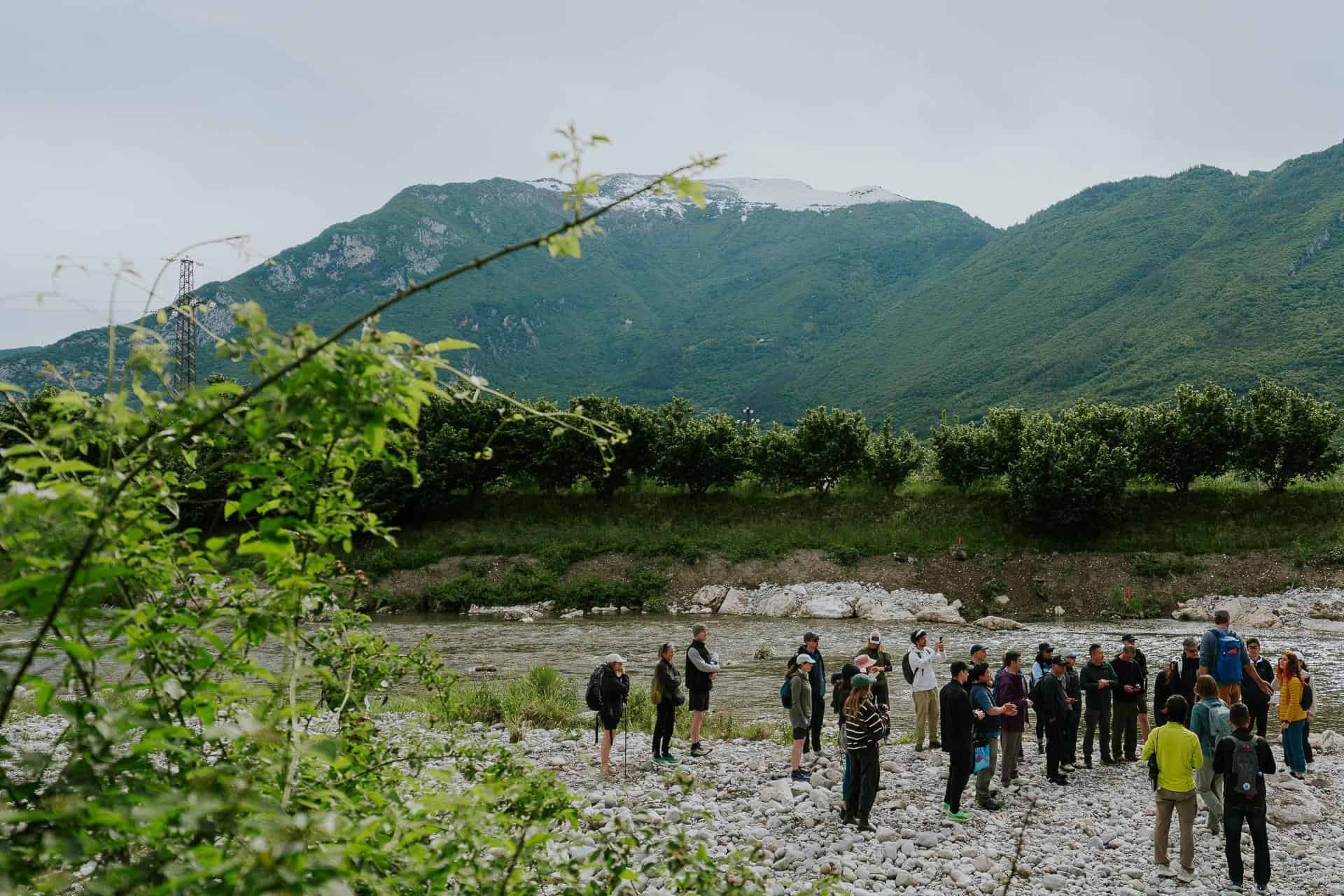
© Giacomo Tonoli — 1st Stop: Renaturalisation
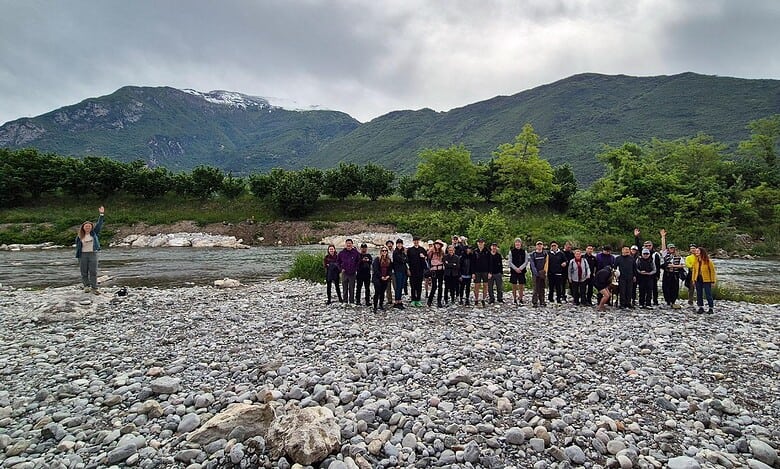
Riva del Garda, Italy — On Saturday 16 May 2026, around thirty outdoor industry leaders gathered on the banks of the Sarca River in the Italian Alps for a citizen science walk organised by EOCA and River Collective, with support from MagNet, as part of European Outdoor Week. In under five kilometres, participants explored how human interventions have shaped one of the region’s most significant waterways, and what that means for biodiversity, nature connection, and the outdoor industry’s role in conservation.
Reading the River
The Sarca River rises in the Alps and flows into Lago di Garda (Italy’s largest lake) at Torbole. The walk took participants through four distinct sections: a renaturalised stretch, a fish farm, a hydroelectric power plant built in 1961, and a canalised section near the river mouth. At each stop, the group scored the natural state of the river using a simple protocol assessing bank condition and the space the river has to shift its flow.
The renaturalised section scored highest; the hydroelectric plant, with its concrete banks and impassable weir, scored lowest. Weirs disrupt fish passage, block sediment flows, and fragment the ecosystems that rivers sustain.
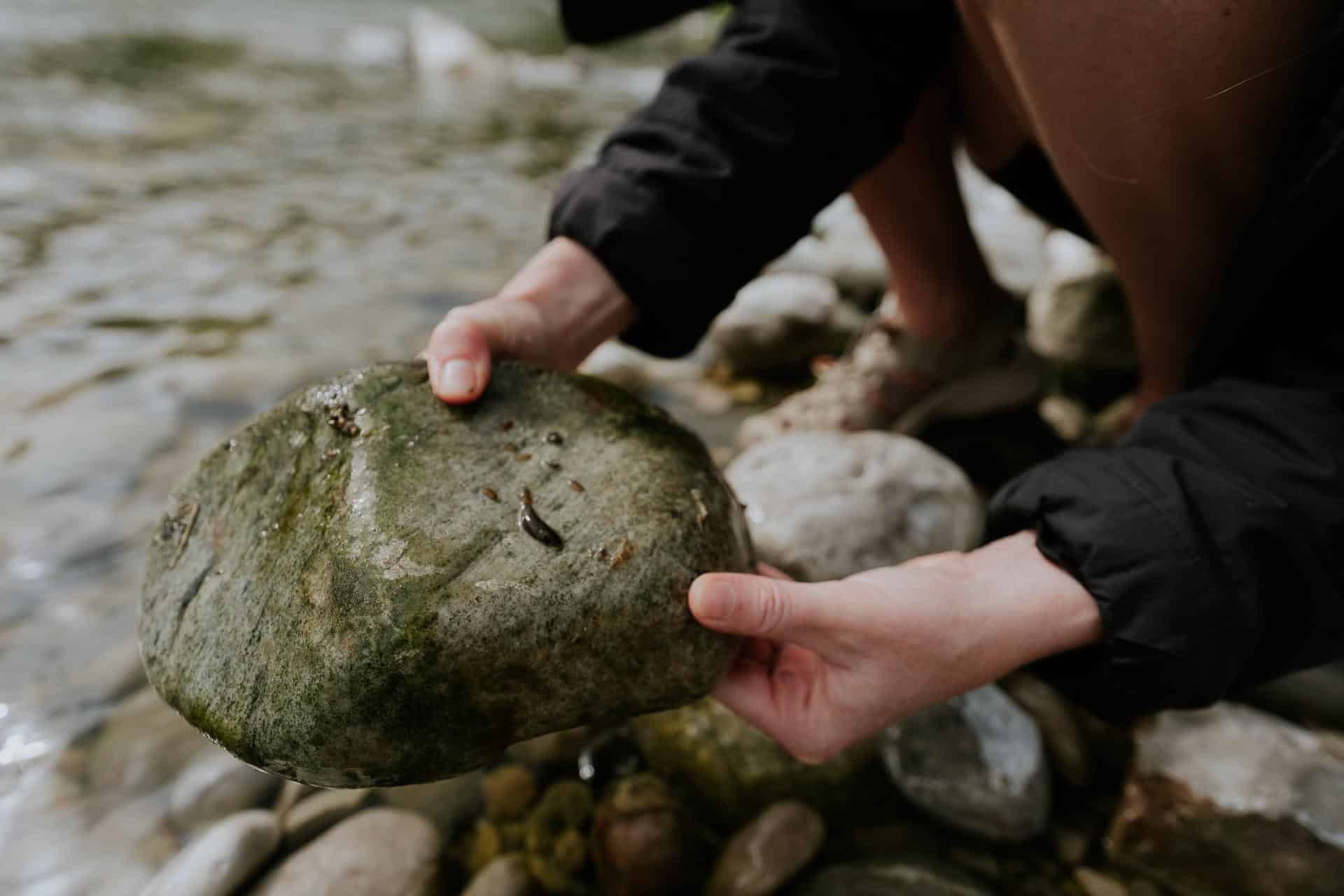
© Giacomo Tonoli — Lake Limpet (Acroloxus lacustris)
Biodiversity Along the Route
To make the impact of these changes tangible, the group conducted two rapid biodiversity snapshots using the iNaturalist app — one in the renaturalised section, one in the canalised section near the lake. In ten minutes at the renaturalised site, participants recorded 49 observations across 20 different species. At the canalised end of the route, that figure dropped to 16 observations and 11 species. Species observed, from flatheaded mayfly larvae and free-living caddisflies to great crested grebes and field horsetail, told the story of a river navigating the pressures of human infrastructure. The correlation, while not a formal study, was clear: the more natural the environment, the richer its biodiversity.
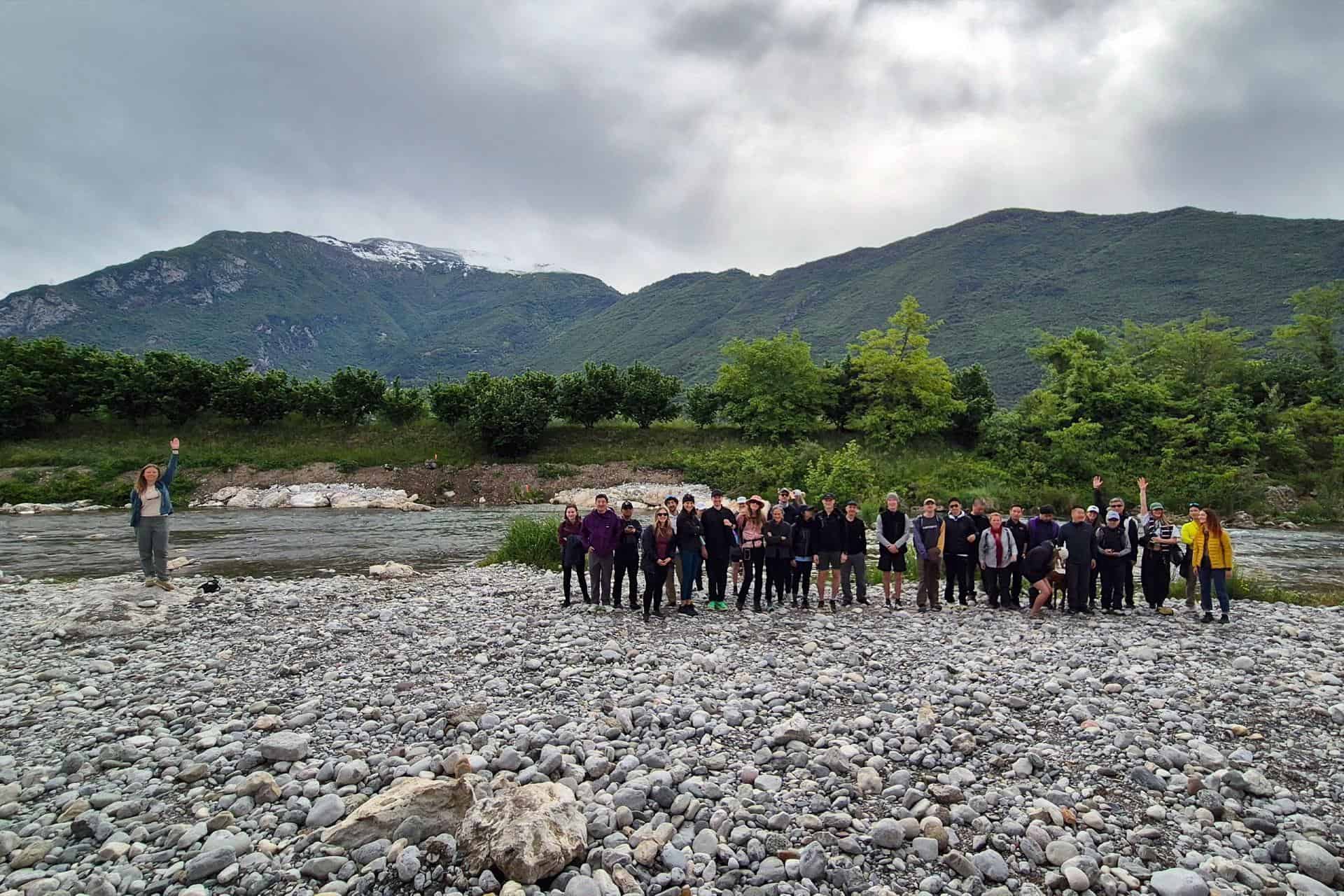
© EOCA — Sense of connection
Feeling Connected to the River
Alongside the ecological assessment, participants reflected on their own sense of connection at each location — standing on a physical line representing a spectrum from disconnected to deeply connected. At the renaturalised section, the group clustered at one end. At the hydroelectric plant, they spread toward the other.
“The difference in how I felt between the locations was striking. Our human infrastructure disconnects us from the natural world, not just physically but emotionally.”
This opened conversation about the outdoor industry’s responsibility to restore the conditions in which meaningful connection with nature can happen, and to ensure those spaces remain accessible to all.
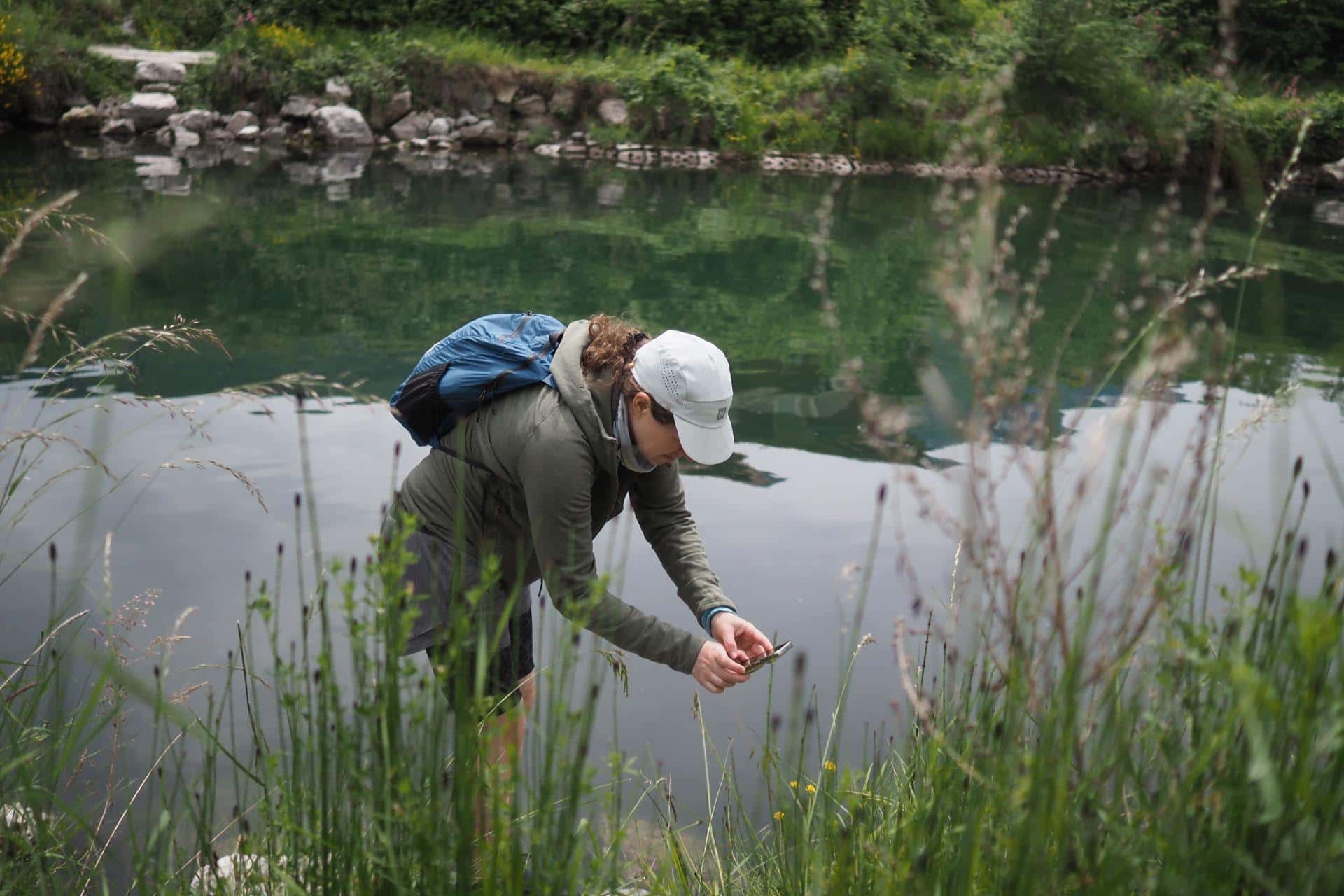
© EOCA — End Point: Where the river flows into the Garda Lake
What a Natural River Looks Like
A recurring theme throughout the walk was shifting baselines: as canalised and dammed rivers become the norm, each generation inherits a diminished vision of what a healthy river looks like, with direct consequences for conservation ambition. The findings and route have been brought to life in an interactive ArcGIS StoryMap, combining maps, photography and geographic data to engage stakeholders beyond those present on the day.
Explore the full results and findings on the StoryMap at storymaps.arcgis.com, and on the EOCA website.
The event demonstrated firsthand the impact that business can have on biodiversity, climate, and people’s connection to the natural world. EOCA provides the opportunity for companies to protect and restore the places we all depend on.
Get in touch with us at [email protected] to find out more.